Learn about the presenters for the 2025 MINKS Regional Conference on June 11-13, 2025, in Sioux Falls, S.D. Click on the presenters' names below to view their bios and headshot photos.


Learn about the presenters for the 2025 MINKS Regional Conference on June 11-13, 2025, in Sioux Falls, S.D. Click on the presenters' names below to view their bios and headshot photos.
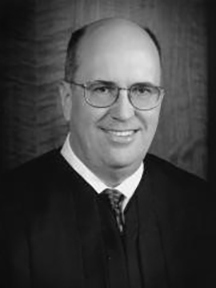 Justice William B. Cassel
Nebraska Supreme Court
Justice William B. Cassel of O’Neill, Neb., is one of the seven members of the Nebraska Supreme Court. He was appointed in April 2012 after having served for eight years as a judge of the Nebraska Court of Appeals and for 12 years as a district court judge for the Eighth Judicial District of Nebraska. He graduated with distinction from the University of Nebraska Lincoln's College of Business Administration with an accounting major and received his juris doctor with distinction from the University of Nebraska College of Law. He was selected to the Order of Coif and served on the Law Review and the National Moot Court Team. Justice Cassel began his legal career practicing law, first with his father and then as a solo practitioner, at Ainsworth, Neb. His general practice included all types of civil and criminal matters, including representing numerous cities, villages, school districts, public power districts, and other public bodies. Justice Cassel has been widely recognized as a leader in the use of technology as a lawyer and judge and has chaired the Nebraska Supreme Court’s Committee on Technology since 2004. Before joining the Supreme Court, Justice Cassel was twice honored as a recipient of the Nebraska Supreme Court distinguished judge award in 2002 and 2011. He also received the Warren K. Urbom Mentor Award of the Robert Van Pelt American Inn of Court for his long service as a mentor to lawyers and judges.
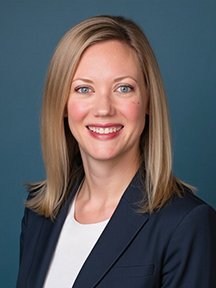 Elizabeth T. Clement
President and Chief Executive Officer, National Center for State Courts
Elizabeth T. Clement is president and chief executive officer of the National Center for State Courts. Previously, she served as chief justice of the Michigan Supreme Court. She joined the Michigan Supreme Court in November 2017, becoming the 113th justice and the 11th woman to serve on the bench. In November 2018, she was elected by the voters of Michigan to an eight-year term. In November 2022, she was chosen unanimously by her colleagues to serve as chief justice, making her the seventh woman to step into that role. Prior to her election to the court, Clement served as chief legal counsel to the governor of Michigan, advising on a wide variety of legal, legislative and policy matters. Clement began her legal career in private practice, representing individuals and in the areas of family law, adoption, probate, estate planning and criminal law. She was licensed to the State Bar of Michigan in 2002. She graduated from the Michigan State University College of Law that same year, where she served as an executive member of the Moot Court Board. She attended Michigan State University on an academic scholarship and graduated in 1999 with a B.A. in political science.
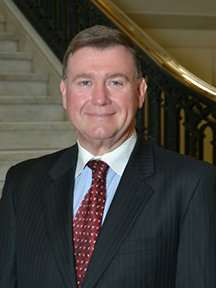 Judge Zel M. Fischer
Supreme Court of Missouri
Judge Zel Fischer was born in Hamburg, Iowa, and grew up in the small town of Watson, Mo. He was educated in Rock Port public schools, and attended William Jewell College, in Liberty, Mo. He went on to graduate from the University of Missouri–Kansas City School of Law with distinction in 1988. Judge Fischer was admitted to the Missouri Bar in 1988 and served one year as law clerk for the Honorable Andrew Jackson Higgins of the Supreme Court of Missouri. From there, he practiced law in Kansas City, engaged in a solo law practice in northwest Missouri, and in November 2006, he was elected associate circuit judge for Atchison County. Judge Fischer served in that capacity until his appointment to the Supreme Court of Missouri in 2008. He served as chief justice from 2017 to 2019, receiving the Theodore McMillian Judicial Excellence Award from the Missouri Bar in 2019. Judge Fischer has been the judicial liaison to the Missouri Board of Law Examiners since his appointment to the Supreme Court of Missouri. He also serves on the Justices Advisory Group and the Uniform Bar Examination Committee of the National Conference of Bar Examiners. Judge Fischer is the chairman of the Board of Directors of The National Courts and Science Institute (NCSI), which is a not-for-profit organization dedicated to training judges in science, and also serves as a member on the National Advisory Board for the University of North Carolina Bryson Center for Judicial Science Education. Judge Fischer is a frequent presenter for judicial and local education, primarily on the topics of appellate practice, professional ethics, and the intersection of law and science.
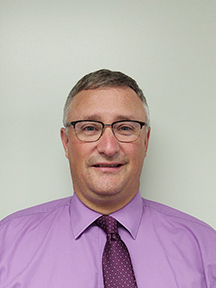 Bob Gast
State Court Administrator, Iowa Supreme Court
Bob Gast was selected as the State Court Administrator in October of 2021. He worked for the State of Iowa, Department of Revenue for six months in 2005 before joining the Iowa Judicial Branch. He served as the Finance and Personnel Manager for the 4th District of Iowa from 2005-09; served as the Deputy Court Administrator of the 4th District of Nebraska from 2010¬-19; and was hired as the District Court Administrator of the 4th District of Iowa in April of 2019. Gast served in the Army from 1992-97. Gast worked in private industry from 1997-early 2005. He completed his bachelor’s degree in political science in 1992 from the University of Maryland, University College.
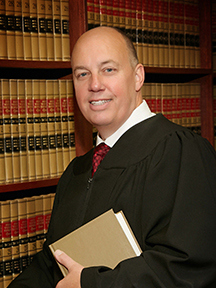 Chief Justice Steven R. Jensen
South Dakota Supreme Court
Chief Justice Steven R. Jensen was appointed to the South Dakota Supreme Court and sworn in on Nov. 3, 2017. Chief Justice Jensen was selected by his colleagues on the Court to serve as Chief Justice beginning in January 2021. He was reselected to a second, four-year term as Chief Justice beginning Jan. 6, 2025. Chief Justice Jensen grew up on a farm near Wakonda, S.D. He received his undergraduate degree from Bethel University in St. Paul, Minn., in 1985 and his juris doctor from the University of South Dakota School of Law in 1988. He clerked for Justice Richard W. Sabers on the South Dakota Supreme Court before entering private practice in 1989 with the Crary Huff Law Firm in Sioux City, Iowa, and Dakota Dunes, S.D. In 2003, Justice Jensen was appointed as a First Judicial Circuit judge and became presiding judge in 2011. Chief Justice Jensen served as chair of the Unified Judicial System’s Presiding Judges Council, president of the South Dakota Judges Association, and has served on other boards and commission. In 2009, Chief Justice Jensen was appointed as a Judicial Fellow to the Advanced Science and Technology Adjudication Resource Center in Washington D.C.
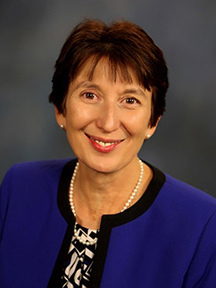 Kathy Lloyd
State Courts Administrator, Missouri Judiciary
Kathy Lloyd is Missouri’s state courts administrator. She leads an agency of more than 200 staff, who provide administrative, business and technology support services to all levels of the state court system. Her first position with the court system was as a deputy juvenile officer. She served in the juvenile system during the next 11 years. Kathy went on to further develop her public-service skills while working as coordinator of the circuit’s new drug court program and then as the circuit’s assistant court administrator. Before joining the Office of the State Courts Administrator, she served for 10 years as the court administrator for the 13th Judicial Circuit. Under Kathy's leadership, the Missouri Judiciary received the National Association for Court Management’s “Top 10 Court Technology Solutions Award” in 2017. Missouri ranked third among the top 10 courts for its court automation solutions, including Show-Me Courts, Track this Case, Pay by Web, the Missouri Electronic Filing System, and the mobile optimization of the Missouri Courts website. Kathy earned her bachelor’s degree (psychology, summa cum laude and Phi Beta Kappa) and master’s degree (educational counseling psychology) from the University of Missouri-Columbia.
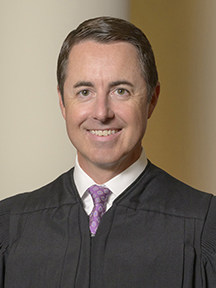 Justice Matthew McDermott
Iowa Supreme Court
Justice Matthew McDermott was appointed to the Iowa Supreme Court in April 2020. He was born and raised in Carroll, Iowa. He graduated from the University of Iowa in 2000. He received his law degree from the University of California, Berkeley, in 2003, where he served as an editor of the California Law Review. Before his appointment, he was a partner at Belin McCormick, PC, where he had a trial and appellate practice in commercial litigation, criminal law and administrative law. He is a former member of the Iowa State Bar Association’s Board of Governors, former chair of its Judicial Administration Committee, and past president of its Young Lawyers Division. Justice McDermott previously served on the board of directors and as board president for Iowa Legal Aid, the Iowa Lottery Authority, the Polk County Homeless Continuum of Care Board, and Central Iowa Shelter and Services. He chairs the Iowa Supreme Court's Access to Justice Commission.
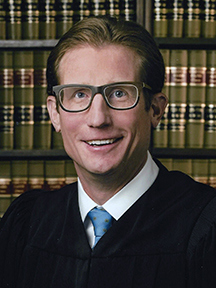 Judge W. Brent Powell
Supreme Court of Missouri
Judge W. Brent Powell is from Springfield, Mo., and completed his undergraduate degree at William Jewell College in Liberty, Mo. He received his J.D. from the University of Missouri-Columbia School of Law in 1996. Judge Powell began his legal career at Lathrop & Gage in Kansas City, Mo. In 1997, he took a position as an assistant prosecutor in the Platte County Prosecutor’s Office in Platte City, Mo. In 2001, he began working as an assistant U.S. attorney for the United States Attorney’s Office located in Kansas City, Mo. During his tenure there, he served as the chief of the general crimes unit and executive assistant U.S. attorney. Justice Powell was appointed to the office of Circuit Court Judge and took the oath of office on Feb. 15, 2008. He served as a circuit court judge in Division 11 of the 16th Judicial Circuit in Jackson County, Mo. Judge Powell served on the Missouri Supreme Court Committee on Procedure in Criminal Cases, Committee on Access to Family Courts, Trial Judge Education Committee, and Missouri Sentencing Advisory Commission. Justice Powell was appointed to the Supreme Court of Missouri and took the oath of office on May 2, 2017. He was named “Judge of the Year” in 2009 by the Association of Women Lawyers of Greater Kansas City, and he received the Kansas City Metropolitan Bar Association President’s Award in 2014 for outstanding service to the Bar. He was recognized in 2022 by William Jewell College with the Citation of Achievement, the college’s highest alumni award. In 2022, he was elected to the American Law Institute to bring his legal expertise in clarifying the law through model codes and restatements.
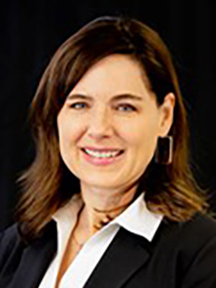 Amy E. Prenda
Deputy Administrator for Court Services, Nebraska Judicial Branch
Amy E. Prenda is deputy administrator for court services with the Nebraska Judicial Branch. She is responsible for promoting statewide administrative practices and procedures, overseeing the operation of court programs, and taking a primary role in strategic planning for all levels of court within the Nebraska Judicial Branch. Amy graduated from Creighton University School of Law in 1994.
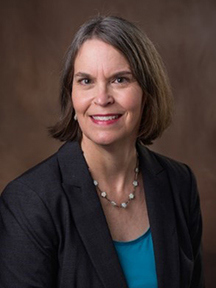 Diane Robinson, Ph.D.
Principal Court Research Associate, National Center for State Courts
Diane Robinson, Ph.D, is a principal court research associate. Since joining the National Center for State Courts (NCSC) in 2019, her project work has focused on data governance, including data collection, data quality, use of data and data sharing. She leads the TRI/NCSC AI Policy Consortium on Law and Courts, the National Open Court Data Standards (NODS) implementation project, and authored the data governance guide for the Court Statistics Project. She also leads the Center for Elders and the Courts, focusing on improved data collection as well as monitoring of guardianships and conservatorships. She earned her Ph.D. at the University of Arkansas for Medical Sciences. She was previously the director of research and justice statistics for the Arkansas court system.
 Greg Sattizahn
State Court Administrator, South Dakota Unified Judicial System
Greg Sattizahn is the state court administrator/general counsel for the South Dakota Unified Judicial System (UJS). Greg was appointed state court administrator on Sept. 9, 2013. Prior to his appointment, he first began work with UJS as a South Dakota Supreme Court law clerk for the Honorable Justice Richard W. Sabers. Following his clerkship, Greg practiced law for a private law firm and then returned to UJS as a staff attorney for the South Dakota Supreme Court. He subsequently served as the UJS legal and legislative counsel and then the director of policy and legal services.
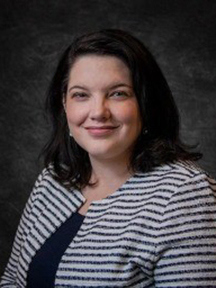 Laurel Klein Searles
Chief of Attorney Services and Compliance, Kansas Supreme Court
Laurel Klein Searles is chief of attorney services and compliance for the Office of Judicial Administration for the Kansas Supreme Court. Laurel earned her bachelor’s degree in business administration from Kansas State University in 2004. She then earned her law degree from Washburn University School of Law in 2008, graduating with Dean’s Honors. After leaving law school, Laurel served as a staff attorney for the Kansas Coalition Against Sexual and Domestic Violence. She then transitioned into state service and began working for the Kansas Department of Labor, where she began as an appeals referee in 2012 and was subsequently promoted to chief of appeals in 2015. Laurel briefly left the Kansas Department of Labor in 2018 to work as an attorney for the Social Security Administration before returning in 2019 to serve as director of unemployment insurance. In 2021, Laurel joined the Office of Judicial Administration. In her current position, Laurel oversees attorney admissions, attorney registration, continuing legal education, the Kansas Supreme Court Law Library, and the newly-created compliance division. Laurel staffs the Rural Justice Initiative Committee and the Learning Center Committee. She is an ad hoc member of the Judicial Counsel Juvenile Offender/Child in Need of Care Law Advisory Committee. She currently serves on the National Conference of Bar Examiner’s Multi-State Professional Responsibility Exam Committee and as a commissioner on the Kansas Human Rights Commission.
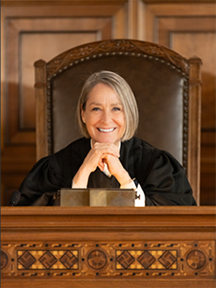 Justice Stephanie F. Stacy
Nebraska Supreme Court
Justice Stephanie F. Stacy was appointed to the Nebraska Supreme Court in 2015 and was retained by voters in 2018 and 2024. Justice Stacy received her J.D. from the University of Nebraska College of Law in 1991, graduating with distinction and Order of the Coif. While in law school, she served on the Nebraska Law Review, the Allen Moot Court Board, and the National Moot Court Team. After law school, she completed a judicial clerkship in the U.S. District Court for the District of Nebraska and then joined the law firm of Baylor, Evnen, Curtiss, Grimit & Witt, LLP, where she practiced from 1993 to 2011. Her civil trial practice focused on tort litigation, insurance coverage litigation, and appeals at all levels. She also served as adjunct faculty at the College of Law teaching Trial Advocacy and Pretrial Litigation. In 2011, she was appointed to serve as a district court judge in Lancaster County, Neb. She was retained by voters in 2014 and served the district court bench until her appointment to the Supreme Court in 2015. As a district court judge, she presided over an adult drug court and handed a general jurisdiction docket that included civil and family law cases, felony criminal cases, administrative appeals, and appeals from county court. Justice Stacy is a member of the Nebraska State Bar Association, Robert Van Pelt Inn of Court, American Board of Trial Advocates, and is a Lifetime Fellow in the Nebraska State Bar Foundation. She co-chairs the Nebraska Supreme Court’s Access to Justice Commission and has chaired the Nebraska Supreme Court’s Continuing Legal Education Commission and the Judicial Resources Commission.
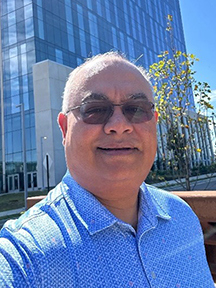 Amitav Thamba
Chief Technology Officer, Marion Superior Court, Indiana
Amitav Thamba is the chief technology officer for the Marion Superior Court in Indianapolis, Ind. Under his leadership in the past 20 years, the court has undertaken several key projects, including digital court recording distribution, electronic search warrants for law enforcement officers, implementation of the statewide Odyssey case management system, the creation of the Supervisory Released System, several INCITE applications at the statewide level, mandatory e-filing in the county, enhancing the efficiency and accessibility of court operations, and the implementation of hybrid courtroom technology in Marion County. This initiative, which involved the use of Cisco WebEx for virtual court hearings, enabled the court to maintain operations seamlessly during the COVID-19 pandemic. Amitav also played a pivotal role in the construction and development of the new courthouse at the Marion County Community Justice Campus, a state-of-the-art judicial center that integrates advanced technology to improve court processes and public. Lately, he has been instrumental in transitioning the court to allow seamless access to the public and attorneys of court recordings and reviewing the new world of generative AI and its implications/effect on the judiciary.
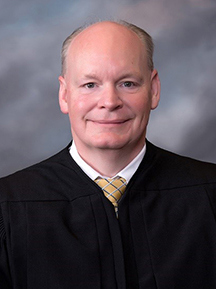 Justice Keynen “K.J.” Wall Jr.
Kansas Supreme Court
Justice K.J. Wall was appointed to the Kansas Supreme Court in 2020. Wall is from Scott City, Kan., and earned a bachelor’s degree in communications from Kansas State University, where he was a 1993 national college debate champion and All-American. He then earned a master’s degree in scientific and technical communications from the University of Minnesota in 1996 and a law degree from the University of Kansas School of Law, graduating Order of the Coif in December 2001. After law school, Justice Wall was a law clerk for Chief Judge John W. Lungstrum of the U.S. District Court for the District of Kansas. In 2004, he became associate attorney for Witwer, Oldenburg, Barry & Johnson in Greeley, Colo., and in 2008, senior legal counsel for Federated Insurance in Owatonna, Minn. Justice Wall returned to Kansas in 2013 as special projects counsel and deputy general counsel for the Kansas Supreme Court, where he handled capital cases and special projects. He was a partner of Forbes Law Group, LLC, at the time of his appointment and represented county hospitals, rural healthcare providers, and community mental health centers throughout Kansas. Justice Wall is the Supreme Court liaison to the Child Support Guidelines Advisory Committee, Kansas Children’s Cabinet, National Center for State Courts’ family plans and programs, Permanent Families Account Advisory Committee, Task Force on Permanency Planning, and the KU Law Research Clinic.